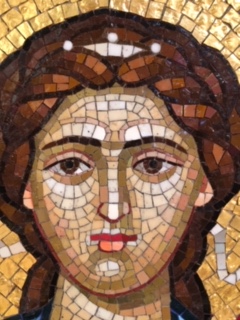
I would have to say the mosaic icons in The Annunciation Greek Orthodox Cathedral in Columbus, Ohio, are more captivating and inspirational than any European cathedral artwork I’ve ever had the pleasure of viewing. Here master mosaicist Bruno Salvatori arranged an estimated five million Venetian glass tiles of various colors, shapes and sizes into intricate patterns to depict the early-church apostles and some of their Old Testament forebears. His exquisite portraits dutifully adorn the walls and vaults of the Byzantine structure as thoughtful reminders of these ancients of the faith, yet they also illustrate something even more profound, the unsearchable beauty and creative genius that is the church—the body of Christ.
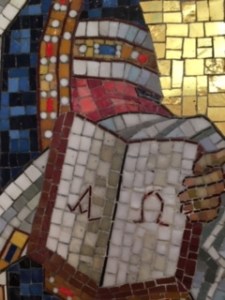 The apostle Paul explained that to each believer there are given different kinds of spiritual gifts, all of which are “the work of one and the same Spirit,” and that “he gives them to each one, just as he determines.”1 Every such gift is a “manifestation of the Spirit … given for the common good,”2 he mused. We are, in a way, like pieces of glass in countless combinations of dimension and hue. Some stand out as bold shards of brilliant red, those who preach or those who exhort us onward to our heavenly goal. Evangelists among us emanate life and hope with all the energy and optimism of sunlight yellow, while teachers of indigo blue dive deep in study, raising to the surface unalterable gospel truths and revealing them in graspable ways. Those who serve as accents or assume background positions are every bit as worthy of honor and appreciation—reliable earth tones representing the bedrock of faith and wisdom, and golden inlays, the hearts of the givers, perhaps the greatest of whom are the poor who sacrifice generous portions of limited means.
 We are all precious tiles of inestimable worth in the hands of the true Master, and He has arranged “every one … just as he wanted [us] to be.”3 Yet this masterpiece, this body of Christ, is alive and with purpose, climbing down from our domes and commencing forth from our walls to serve others in grace and truth and in justice and mercy. Peter challenges us: “Each one should use whatever gift he has received to serve others, faithfully administering God’s grace in its various forms.”4 Paul likewise exhorts, “Do not neglect your gift”5; we are instead to “Fan into flame the gift of God, which is in you … For God did not give us a spirit of timidity, but a spirit of power, of love and of self-discipline.”6
It is a beautiful thing God has done in your life and in mine. Then this body He has made from all of us is utterly breathtaking, and what He accomplishes through us, life-giving.
Father, through Christ you bring us into your glory; be glorified in the praises—the living sacrifices—of your people today. In Jesus we live, and in His name we pray. Amen.
1 1 Corinthians 12:11
2 1 Corinthians 12:7
3 1 Corinthians 12:18
4 1 Peter 4:10
5 1 Timothy 4:14
6 2 Timothy 1:6, 7


 Paul Nordman—Author